
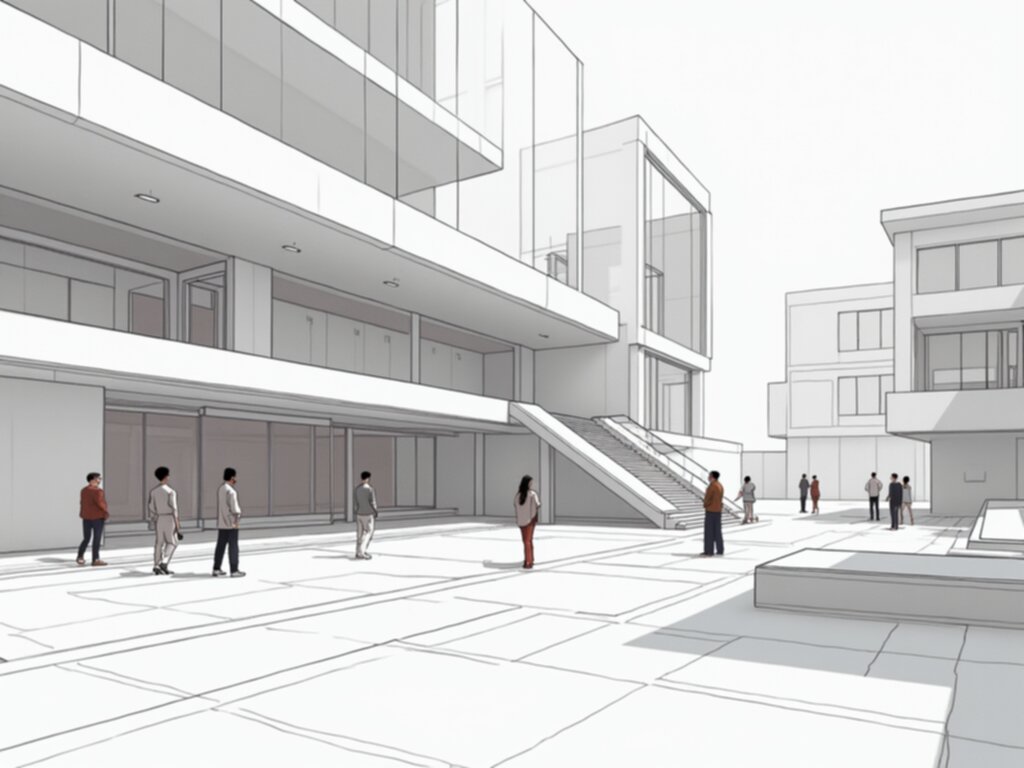
Defining BIM: Moving Beyond 3D Modeling to Integrated Information Management
Let’s be honest, for a long time we all treated BIM like it was just a fancy way to draw a 3D building on a computer screen. But looking at where we are now in late 2025, that view is honestly pretty outdated. I’ve been digging into how Universal Scene Description has finally killed off those annoying data silos that used to keep our software from talking to each other. Now, we’re seeing designers track embodied carbon in real-time, so you aren't just guessing about the planet's health after the building is already half-finished. It’s kind of wild to think about, but the "I" in BIM—the information—is actually what’s running the show legally these days. Following ISO 19650 standards has actually cut down project disputes by about 34%, which means fewer headaches and more time actually building things. Think about it this way: instead of a static picture, we’re creating a living brain for the building. We’re even using synthetic occupancy data to predict how people move with 98% accuracy before a single brick is even laid. And it isn't just for new, shiny skyscrapers either; I’ve seen sub-millimeter laser scans used to monitor tiny shifts in historic landmarks in real-time. Firms that actually focus on the data, not just the pretty pictures, are seeing a 22% jump in efficiency once the lights are turned on. By plugging IoT sensors directly into the model, these buildings are basically teaching themselves how to slash energy use during peak hours. So, let's stop calling it a modeling tool and start seeing it for what it really is: a complete, integrated management system that keeps us from flying blind.
Synchronizing the Workflow: Enhancing Design Integrity through Interoperability
You know that feeling when you’re trying to move a project from one program to another and everything just... breaks? It’s the worst, but honestly, we’re finally getting past those messy handoffs. Here’s what I mean: using the gbXML schema to move architectural models into thermal ones has cut down that soul-crushing manual data re-entry by about 85%. And with IFC 4.3 finally filling the gap between buildings and infrastructure, we’re seeing a 15% drop in material waste because the math actually matches up across different platforms. I’ve been tracking these new API-driven sync tools, and the lag is now under 200 milliseconds. That’s fast enough for teams to work on a model together in real-
From Visualization to Validation: Leveraging BIM for Advanced Performance Simulations
Honestly, I remember when "simulation" just meant making a building look pretty in a sunset render, but we’ve moved way past that now. Today, we’re using BIM as a digital laboratory where we can actually stress-test how a structure breathes and reacts before the first shovel hits the dirt. Think about wind—instead of expensive physical models, we’re running airflow tests right in the model that get within 4% of a real wind tunnel. It’s wild to see designers using ray-tracing to nail the acoustics of a theater with 0.1-second precision on the reverb. But it's not just about sound; we're using smart math to shave 30% of the weight off steel frames without losing an ounce of strength. We’ve
Scaling Innovation: How BIM Drives the Digital Transformation of Project Delivery
I’ve spent a lot of time on messy job sites, and you know that moment when you realize the steel just doesn't line up with the concrete? It’s frustrating, but we’re finally seeing a shift where BIM is moving from a desk-bound tool to something we actually wear on our faces. Field teams are now hitting a tiny 0.5-centimeter tolerance because they’re using augmented reality headsets to project holographic models right onto the raw site. And it gets even cooler when you pair that with autonomous robots that scan the floor daily, which has helped us cut down those annoying schedule delays by about 26%. I’m honestly blown away by how neural networks are starting to predict 60% of design clashes before we even draw them, saving us