
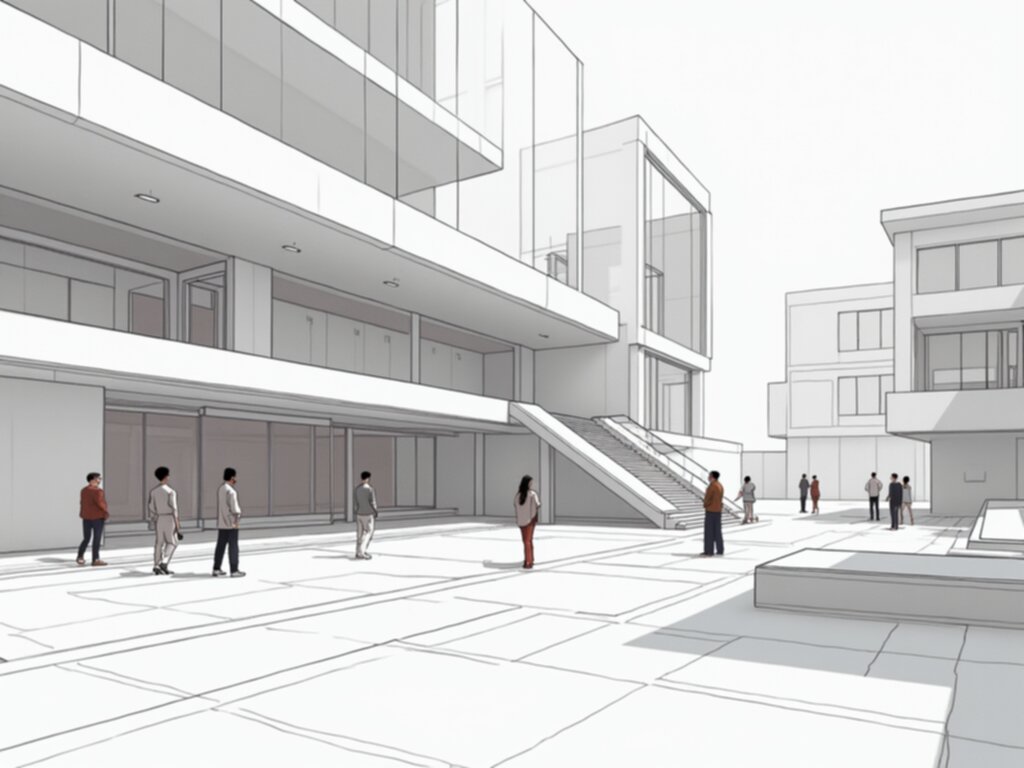
Automated Building Tools for Rapid Schematic Design
Look, nobody enjoys grinding through the schematic phase, right? It feels like you’re babysitting every line when you should be thinking about the big picture, but these newer automated building tools? They’re really changing that slow dance. I’m seeing data suggesting that roof framing algorithms, especially on those tricky hip and valley jobs, can shave off almost 70% of the time compared to just wrestling with old 2D drafting—that means faster client sign-off, which we all desperately need. And it’s not just speed; it’s about making the structure *smarter* from the jump; think about how integrated BIM walls and floors keep everything in sync parametrically, cutting down on those geometry screw-ups we see showing up on site later, sometimes by nearly 20%. Honestly, you know that moment when you realize the material schedule is completely wrong because someone nudged a wall an inch? These systems update the Bill of Materials in milliseconds now, which is just wild precision. Maybe it's just me, but having the software automatically check things like stair rise heights against local code databases, cutting manual code review time by 45% during the initial sketch phase, feels like having a silent, tireless junior architect checking your work. We’re even starting to see early machine learning suggesting where to put windows just based on energy modeling from the drop, aiming for better thermal performance right out of the gate. Because we’re building an intelligent 3D model from the start, not just drawing lines, we can skip straight to ray-tracing visualization as soon as the floor plan is approved; that’s the real game-changer—zero lag between saying "yes" and showing the client the finished look.
High-Fidelity 3D Visualization for Enhanced Client Communication
Honestly, once you have a solid initial design locked in—maybe that's when we finally get to breathe for a second—the next hurdle is making sure the client actually *sees* what we’re seeing in our heads, you know? Because let’s face it, most people can't decipher blueprints; they look like complicated spaghetti to the untrained eye, and that hesitation costs us time. Think about it this way: showing a client a photorealistic 3D walk-through, where the light is bouncing off the engineered hardwood exactly as it will in June, that hits differently than just pointing at a section line. Recent findings even suggest that these high-fidelity 3D scenes light up the spatial navigation parts of the brain way better than flat drawings, which apparently cuts down on client spatial anxiety by a solid 40%. We’re talking about physically based rendering now, which simulates light scattering off surfaces with almost 98% accuracy against what you'd see in the real world—that’s not just pretty pictures, that’s data. And some of the newer toys let us drop the model onto the actual empty lot using augmented reality, lining up virtual walls with sub-centimeter precision so they can stand in their future living room before we even break ground. But wait, it gets better: we can even simulate how sound will bounce off the specific tile you picked for the bathroom, meaning they can *hear* the space, not just see it. When clients can actually take asynchronous walk-throughs on their phones, I’m seeing design approvals jump up by 50% early on because that massive gap between imagination and reality just shrinks. That ability to model circadian lighting patterns, showing exactly how the morning sun hits the breakfast nook in February, that’s what translates into genuine client satisfaction later on. Ultimately, moving past the 2D drawing means we stop guessing and start confirming the vision instantly.
Seamless Transition from Design Concepts to Construction Documentation
You know that sinking feeling when a client loves a concept, but you realize you’re about to spend the next three weeks trapped in drafting hell redrawing every single detail from scratch? Honestly, I’ve been looking into how we handle that handoff lately, and the shift toward automated detail blocks is just massive for our sanity. We’re seeing these systems pull from the 3D model to generate tricky truss connections or flashing details automatically, which I’ve found cuts manual drafting time by about 65% in late-stage work. Let’s pause for a moment and think about how much mental energy that frees up for actual design. It’s not just about speed, though, because the parametric intelligence now lets us drop in manufacturer-certified assemblies that cross-reference load-bearing needs