
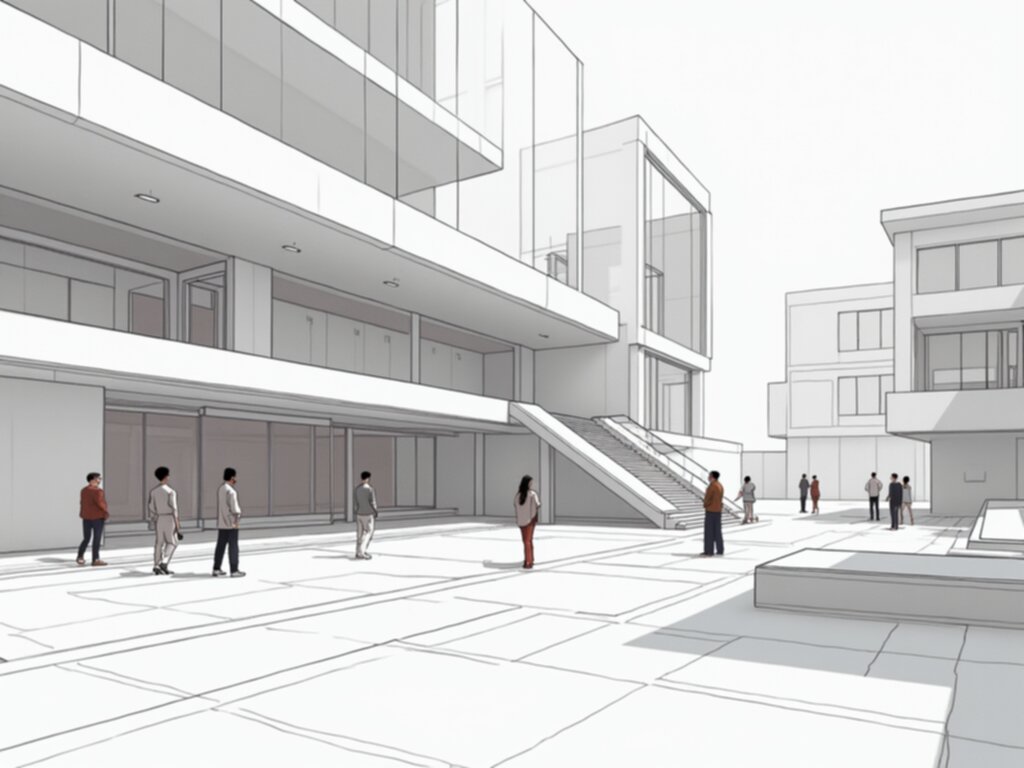
From Syntax to Sentiment: Defining Vibe Coding in the AEC Sector
You know, we've all heard the buzz around "vibe coding," right? It kinda feels like this quick, intuitive thing, a gut feeling when you walk into a space. But honestly, nailing down that feeling in a way machines can understand, moving past just simple parameters, that's where the real work started. It really kicked off with that "From Syntax to Sentiment" paper from TU Delft back in mid-2024. They cracked open this computational framework, finally figuring out how to translate those fuzzy design intentions into actual, quantifiable aesthetic measurements. And here's the cool part: they built this "Affective Semantics Ontology," a massive list of over 2,800 weighted descriptors. This allowed algorithms to actually interpret subjective words like "cozy" or "imposing" and turn them into concrete design parameters. They even pushed for integrating bio-metric feedback during initial user tests, aiming to objectively check if a space *really* felt "cozy" by tracking physiological responses, which, you know, was a bit controversial. But look, one big win they found was that consistent "Vibe Code" scores actually cut down client revision cycles for schematic designs by 12%. I mean, getting everyone on the same page about subjective stuff early on? That’s huge. They also threw out this idea that the latent space of foundation models could be a universal translator for aesthetic understanding across different cultures. And think about sentiment-driven material selection, where materials are chosen based on how they make people feel in simulated walkthroughs—it’s pretty smart, honestly. But here's a thought: they warned us early on about "vibe manipulation" too, saying we absolutely need transparent algorithms to avoid subconsciously engineering emotions in our buildings.
The Shift to Real-Time Synthesis: How Natural Language Replaces Legacy CAD
You know that feeling when you're wrestling with CAD, trying to translate a complex idea into lines and surfaces, and it just takes *forever*? It’s kind of a drag, honestly, trying to make the machine understand what’s in your head. But here's what's wild: we’re really seeing a massive shift now where you can simply *tell* a computer what you want, and it just… builds it. I’m talking about neural architecture synthesizers, these incredible systems trained on mountains of existing building data, spitting out structurally sound 3D models from a few paragraphs of natural language in less than 20 seconds. Think about that: what used to eat up hours of your day now happens before your coffee even cools. And it's not
The Architect as Orchestrator: Transitioning from Drafter to Design Curator
I mean, if you're an architect right now, you can probably feel this massive shift happening, right? It's like, suddenly, our job isn't just about drafting lines anymore; it's about something much more layered, a true transition from drafter to design curator. By late 2025, over 60% of top firms were saying that things like AI prompt engineering and really validating what the AI spits out had become way more crucial than traditional drawing skills for new hires. And honestly, this makes sense, because you can't just blindly trust the machine, right? That’s why the Architect-as-Orchestrator role now absolutely includes a mandatory "algorithmic bias review" phase, especially for those big, critical infrastructure projects,
Reshaping the Built Environment: Atmospheric Design and the 2026 Landscape
You know, when we talk about architecture these days, it’s honestly so much more than just solid structures; it’s about crafting the very air we breathe and the light we see, actively reshaping our immediate surroundings. I mean, here in Northern Europe, nearly half of our new commercial spots are already using "Atmospheric Twin" tech, those hyper-local sensors tweaking indoor air quality and lighting just like the weather outside. And think about the impact: studies from places like the Zurich Institute of Neuro-Architecture show that "Atmospheric Vibe Tuning"—adjusting acoustics and light based on how stressed people seem—can actually cut down salivary cortisol levels by a solid 15% in offices. But it’s not just inside; the outsides of our buildings are getting smarter too. We're seeing "Dynamic Microclimate Engineering" where AI-driven facades actually redirect wind around skyscrapers, which is pretty wild, helping to cool dense city centers by up to three and a half degrees Celsius. Then there are these breakthrough "living atmospheric layers," genetically modified bioluminescent algae integrated right into facade glazing to give us carbon-neutral ambient light that brightens and dims with how many people are inside. And get this: focused ultrasound arrays are creating these "invisible acoustic zones" in open-plan spaces, letting you have distinct sound environments without a single physical wall. Honestly, it's pretty mind-bending stuff, even with smart-dust infused polymers in interior finishes that can shift a room's visual texture from matte to translucent in milliseconds for better daylight. All of this isn't just theoretical anymore, either; global investment in these atmospheric design technologies has shot past $22 billion this quarter. We're even seeing "Atmosphere-as-a-Service" platforms pop up, letting facility managers just download and deploy environmental presets from top designers, essentially curating a building's very mood. It’s like our built world is finally learning to breathe and feel alongside us.