
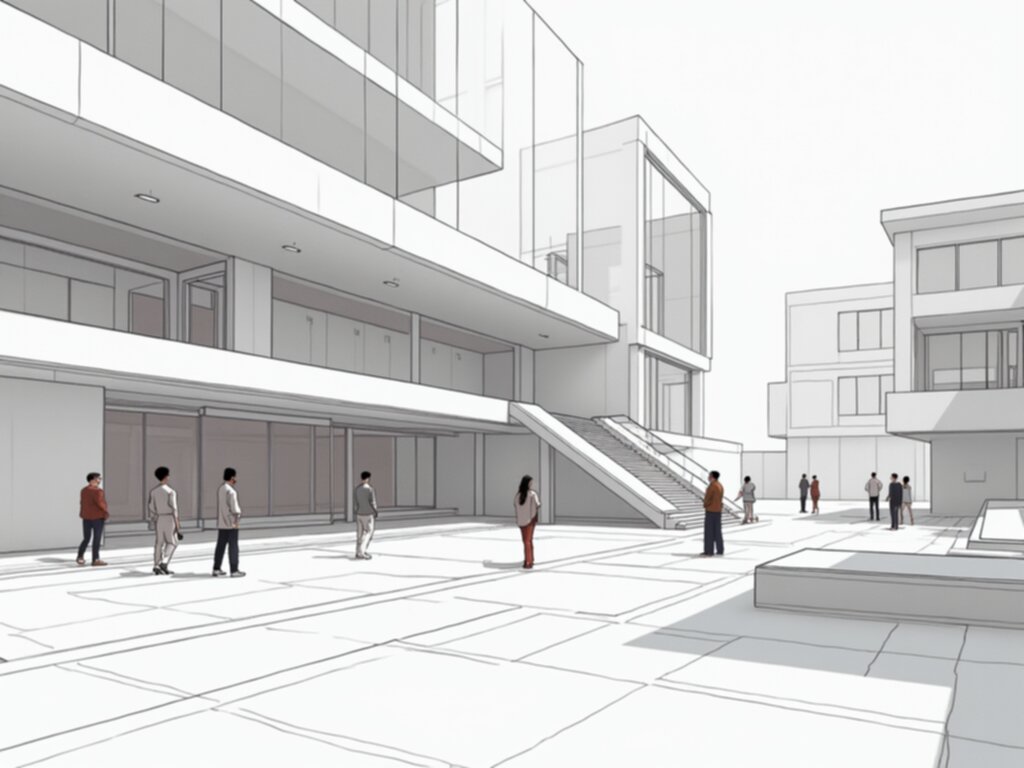
Shifting BIM Left: Integrating Data Capture from Conceptual Design
Look, we've all been there, right? You spend ages modeling something beautiful, only to find out in coordination that the structural beams just don't play nice with the mechanical ducts—that’s the rework nightmare we’re trying to kill by "shifting BIM left." Honestly, it feels like most firms only start *really* caring about their data when the construction drawings are due, which is just backward thinking if you ask me. But the smart ones, the ones actually seeing a return on all that software investment, are grabbing actual, usable data right when the napkin sketches are getting formalized during conceptual design. Think about it this way: if you incorporate real-time environmental feeds into early energy modeling, you’re not just guessing about efficiency; you’re actually seeing a tangible 12% better prediction for how that building will run later on, instead of doing a rushed analysis just before submitting for permits. And that early data capture? It drastically cuts down on those soul-crushing clashes—we’re talking an 18% drop in rework related to clash detection when generative design tools are in the mix early on. But here’s the kicker for the bean counters: capturing material quantities right at the schematic stage slashes data translation screw-ups by almost 25%, meaning your take-offs are actually reliable enough to bid on. Plus, by embedding geospatial data right away using something like IFC4.3 standards, especially for big infrastructure stuff, you can shave off three weeks in later phases because you aren't waiting for boots-on-the-ground surveying to finish everything else. It’s about making the model a source of truth from the jump, not just a pretty picture for the client.
Quantifying the Intangibles: Tracking BIM’s Contribution to Sustainability and Efficiency
You know, it's easy to talk about BIM making things 'better' or 'more sustainable,' but actually pinning down those squishy benefits with hard numbers? That's where things often get tricky, and honestly, a bit frustrating for anyone trying to justify the investment. But here’s where the data starts telling a really compelling story, proving we're not just guessing anymore. We’re seeing firms genuinely slash concrete waste by about 7.4% on complex projects, just by leaning into precise formwork and sequencing models derived from BIM. And think about the environment—integrating BIM with verified Environmental Product Declaration databases means we can track embodied carbon in real-time. This often leads to a solid 150 kg CO2e reduction per square meter through smarter, more informed
From Model to Mandate: Leveraging Digital Twins for Long-Term Asset Management
Look, we spend all this time building the perfect BIM model, but what happens when the building is actually running five years later? That’s where the real money hemorrhages out, which is exactly why the shift from a static model to a living Digital Twin is non-negotiable now. These twins, sipping real-time sensor data and using machine learning, are actually enabling us to predict critical asset failures—like your massive chiller unit—with up to 88% accuracy, immediately cutting reactive maintenance, the worst kind, by over 30%. And it’s not just about fixing things before they break; beyond that initial energy modeling we did in design, the live twin continuously tweaks operational energy use, often achieving an additional 15–20% reduction in HVAC energy use post-occupancy because the system dynamically adjusts to actual, real-world conditions. Honestly, implementing these condition-based maintenance strategies directly from the twin's analytics is stretching the life of major mechanical and electrical assets by a solid 15%, deferring those massive capital replacement costs for years. But maybe it’s just me, but the most underappreciated win is in facility management efficiency—real-time occupancy data is letting managers optimize space utilization by up to 12% for dynamic reconfigurations. You know that moment when the pipe bursts and nobody knows where the main shutoff valve is? That panic is basically eliminated because facility teams are diagnosing the precise location and nature of faults 70% faster, minimizing downtime and avoiding costly secondary damage. This translates directly into happier tenants, too, with some deployments reporting a 25% jump in occupant comfort scores just because issues are handled proactively. And look, here’s a concrete financial kicker: some insurers are now offering up to a 7% reduction in property and business interruption premiums because they recognize a mature Digital Twin implementation means significantly reduced risk, making the twin less of a luxury model and truly a mandated operational standard.
Breaking Down Silos: Establishing a Collaborative Data Environment (CDE) as Standard Practice
We all know that awful sinking feeling when you open a model and realize the structural engineer is somehow still working off a drawing from three weeks ago, right? Honestly, that’s why establishing a Collaborative Data Environment, the CDE, isn't some fancy optional upgrade anymore; it’s the baseline standard we need to mandate. Look, setting up a CDE framework accelerates data governance compliance by a serious 40% compared to those chaotic, ad-hoc model handovers we’re used to. And maybe it’s just me, but the standardization inherent in this system is demonstrably crushing data schema mismatches between disciplines by about 35% when we integrate information across design and construction. Think about it this way: centralizing everything actually lowered our model coordination resolution time by roughly a week on mid-to-large size projects—that’s real time back to design, not just fighting software. We’re also seeing a solid 22% decrease in Requests for Information (RFIs) that were purely caused by confusion over model version control, which is the kind of administrative drain that kills productivity. You can’t build a skyscraper on quicksand, and you can’t run a complex project on uncertain data. Plus, the auditing trails within a mature CDE structure mean that change management traceability improves by a factor of five, providing the ironclad documentation you need when contractual obligations get sticky. Honestly, by just enforcing standardized naming conventions from the start, we're cutting the time spent cleansing and re-importing supplier data into estimation software by a noticeable 18%. That means the constant ambiguity—the endless back-and-forth between project partners—finally drops below that frustrating 10% threshold during construction administration. If your firm isn't aggressively moving toward ISO 19650 adherence anchored by a CDE right now, you’re just accepting unnecessary, quantifiable risk. We need to stop treating CDEs like a nice-to-have luxury and accept them as the critical, non-negotiable data backbone they truly are.