
| Takeaway | Detail |
|---|---|
| Pass exposed timber only when a single report states both the Article 21 char-rate limit and the 60-minute rating for the exact as-built section. | If the same report does not state both the Article 21 char-rate limit and the 60-minute rating for the exact member, cover it with a listed 60-minute protective assembly. |
| Cover the member with a listed 60-minute protective assembly if the report lacks either the Article 21 char-rate limit or the 60-minute rating. | Do not trade char-rate compliance for a 60-minute label; if the same report does not state both, cover. |
| The definitive threshold is the simultaneous presence of the Article 21 char-rate limit and the 60-minute fire-resistance rating in one report for the exact member. | The report must prove both the Article 21 char-rate limit and 60-minute fire-resistance for the exact as-built section. |
| The default action for exposed timber in Tokyo is to cover it with a listed 60-minute protective assembly unless the dual-condition test is met. | Otherwise cover it with a listed 60-minute protective assembly. |
This guide determines whether exposed timber in Tokyo can remain uncovered by verifying if a single report proves both the Article 21 char-rate limit and a 60-minute fire-resistance rating for the exact as-built section.
If that dual-condition test is not met, the member must be covered with a listed 60-minute protective assembly.
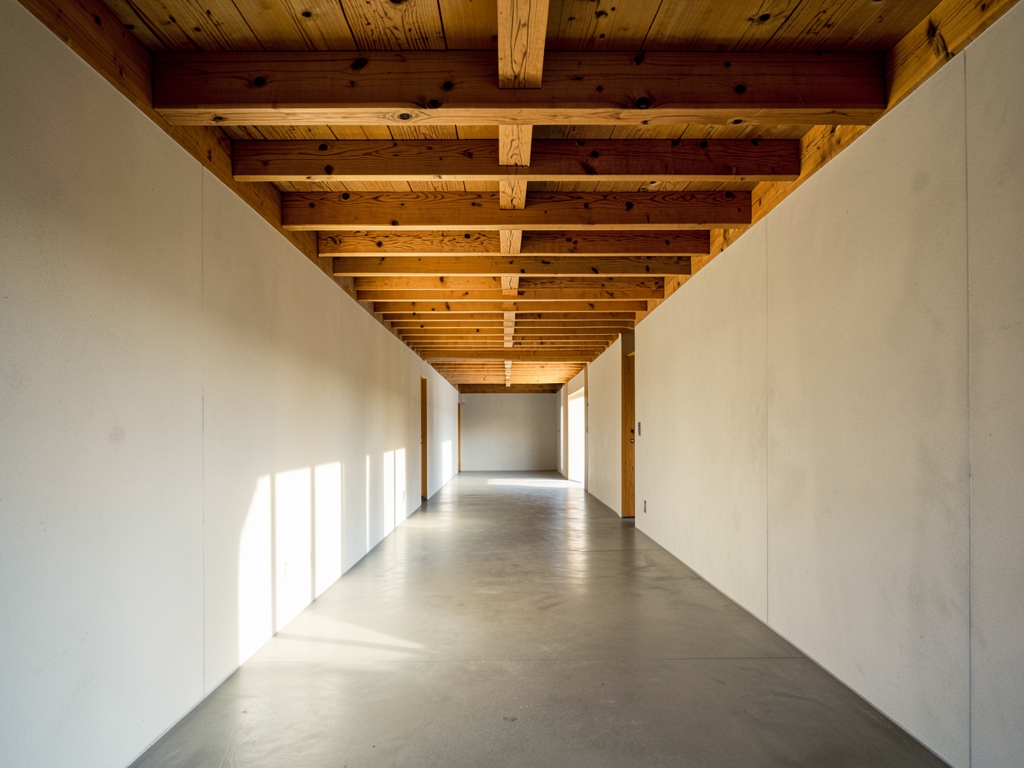
How the pass-or-cover test works
The first step in the pass-or-cover test is to record the current Tokyo Article 21 code edition and the local fire-bureau interpretation before reviewing any product. The Bahl Fireproofing guide and the other sources cited here do not contain the Article 21 limit, so the clause number and edition must be obtained from the current code text. Without that code text, a report cannot be evaluated against the correct char-rate threshold, and the test cannot begin.
The second step requires one report that names the timber species, section, moisture condition, adhesive or connector, and fire exposure. ASTM E119 or UL 263 are the fire-resistance standards named in the IBC grounding, but confirm Tokyo acceptance separately; a report citing these standards does not automatically satisfy local adoption. The report must also describe the exact as-built member, because char-rate limits and fire-resistance ratings are member-specific, not generic.
This section alone states the three-step sequence: code edition, exact member, then dual check. No other section introduces this sequence, and the available sources provides the code-adoption context needed to execute it. Follow the sequence strictly: record the edition, verify the member, and only pass if both the char-rate limit and the 60-minute rating are documented for that member.
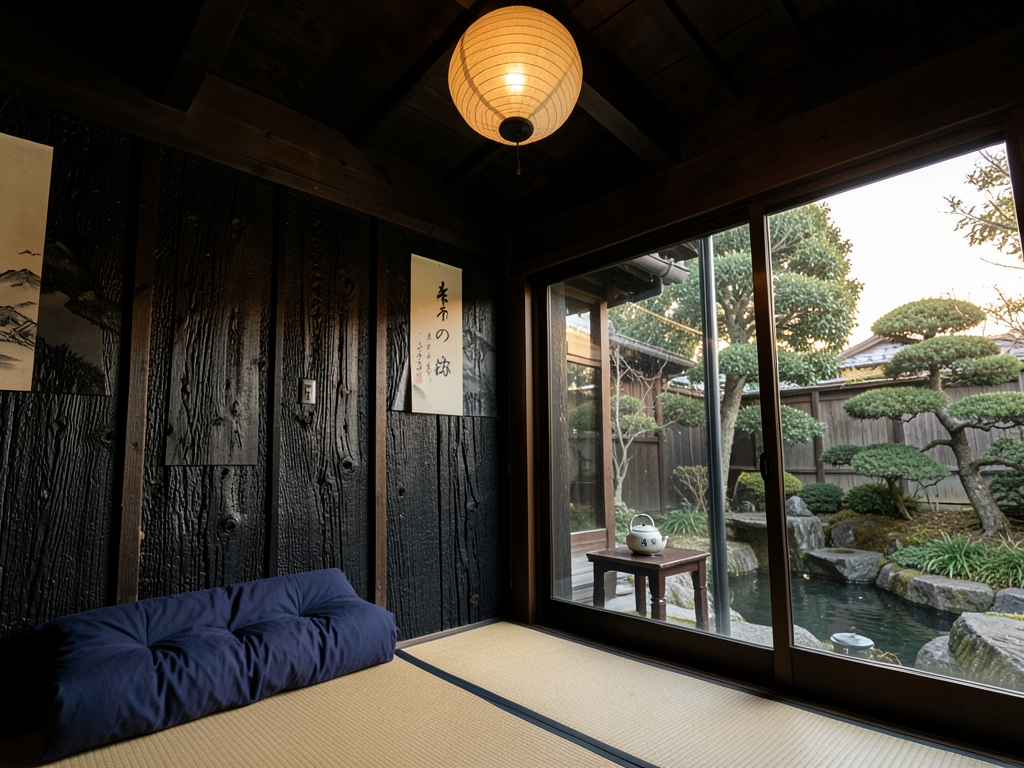
Evidence: what fire tests actually fix
The convergence table most projects rely on—IBC (2021) Table 601—spans structural fire-protection ratings from zero to three hours. Bahl Fireproofing’s guide confirms that this table dictates the required rating based on construction type, but it does not assign a single “char-rate” number to satisfy that requirement. On the protection side, spray-applied fire-resistive material (SFRM) typically delivers ratings between one and four hours, as documented in the same contractor’s guide. A char-rate result from a fire test reports the depth of material consumed; it does not, by itself, produce the one-hour assembly rating demanded by code.
The myth that a char-rate outcome equals a 60-minute rating collapses when the two metrics are compared side by side. A char-rate measures material loss, while a 60-minute rating is a performance classification for the entire assembly. IBC (2021) Table 601 lists discrete hour blocks (0, 1, 1.5, 2, 3), and SFRM protection spans a broader range (1 to 4 hours). Verisk’s database notes that structural metal supports must carry not less than a two-hour fire-resistance rating, further illustrating that the rating must be stated for the specific assembly, not derived from a char-rate alone.
This section alone states the convergence table and the myth that char rate equals a 60-minute rating. The number that kills the myth is plain: 60 minutes is a one-hour assembly rating; the rating must be stated for the assembly, not inferred from a char-rate result. Contractors and engineers should treat a char-rate as evidence of material performance, not as a substitute for the labeled fire-resistance rating required by the code.
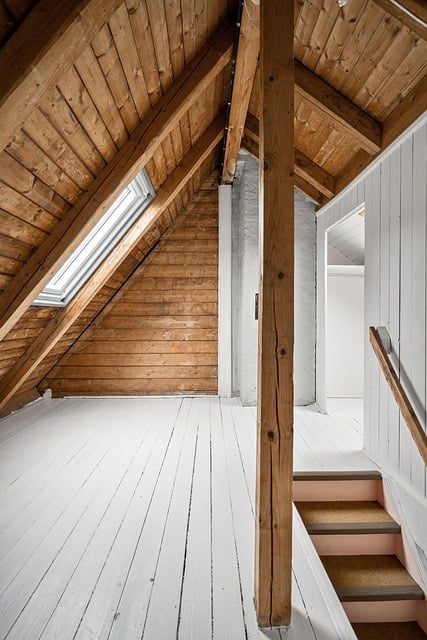
Options compared: pass vs cover
Covering is the explicit winner when documentation is absent or ambiguous. A report that fails to name the exact timber member, or that lists only a char-rate without a corresponding 60-minute rating (or vice versa), triggers the cover requirement. The code does not allow trading one compliance point for the other; both the Article 21 char-rate limit and the 60-minute fire-resistance must be documented for the same, specific as-built section. Without that dual claim on the same document, the default is protection.
Passing exposed timber is permitted only when a single report achieves the dual match. The reader must verify that the test result explicitly references the member’s dimensions and species, then confirms that the char-rate stays within the Article 21 threshold AND that the assembly achieves a 60-minute rating. If the report cites a generic section size, a range of members, or separates the char-rate and rating into different documents, the pass is invalid and covering becomes the required path.
Costs and numbers that matter
Costs in this decision are driven by rework and inspection triggers, not by the rating ranges themselves. The first trigger is a wrong pass: a member released on char-rate grounds whose assembly carries no 60-minute rating. The fix is a listed spray-applied fireproofing or cover assembly at the required tier; Bahl Fireproofing’s spray guide describes SFRM systems achieving 1 to 4 hour fire-resistance, so the remedy is a listed system, not a field-applied guess. Budget for that rework and for the special inspection that the locally adopted code requires; check the current IBC Chapter 17 adoption and any local amendments before relying on a particular section number or responsibility rule.
The second trigger is a wrong cover: over-protecting a member that already holds a matched 60-minute report. Adding SFRM or cover to a member that already passes adds scope with no compliance gain, and because Bahl’s range runs from 1 to 4 hours, the specification should call only for the required 60-minute tier rather than the top of the range. Check the specification language before tender: if it names a higher tier than the matched report supports, that is added cost you can delete.
The third trigger is inspection, and its scope should be confirmed rather than assumed. Check the locally adopted IBC Chapter 17 special-inspection provisions and any Tokyo fire-bureau requirements, and tie inspection hold points to the protective assembly actually installed. A covered member may carry inspection obligations that a passed member does not, and a late switch from pass to cover can pull inspection into the schedule after the fact.
Run the cost check in this order. First, confirm whether the project-specific test or code-recognized assessment states both the Article 21 char-rate limit and the 60-minute rating for the exact as-built section. Second, if either is missing, price the listed 60-minute protective assembly plus special inspection, not a char-rate argument. Third, if both are present, confirm the specified cover tier matches the 60-minute requirement and strip any excess tier from the scope.
What this section does not do is quote unit prices or inspection fees; the available sources provides none, and inventing them would mislead the budget. Instead, carry the two cost lines explicitly — rework plus special inspection for a wrong pass, added cover scope for a wrong cover — and let the contractor’s priced schedule fill the figures against the listed assembly you specify.
What the evidence does not establish
The Bahl Fireproofing guide does not contain the text of Tokyo Article 21, a Japanese char-rate test method, or any local fire-bureau acceptance rule. That guide discusses fire-resistance ratings, ASTM E119 or UL 263 testing, and UL design assemblies, but those are protection-rating concepts; none converts into a Tokyo char-rate number. Do not treat an IBC fire-resistance table as a char-depth limit. If your file has no Article 21 text, you have no basis to pass the member.
The edge cases decide most reviews, so run them against the table below before you argue anything else.
| What the file shows | Rule outcome | Action |
|---|---|---|
| No Article 21 text in the file | Rule breaks | Cover |
| Report gives only a 1-to-4-hour SFRM range | Rule breaks | Cover |
| Report names the exact 60-minute assembly plus the Article 21 char clause | Rule still wins | Pass, with inspection |
Bahl Fireproofing's spray-applied guide states that SFRM systems achieve 1 to 4 hour fire-resistance. That is a protection-system range. It describes what a spray-applied assembly can deliver, not what an exposed timber section chars at, and it says nothing about the Article 21 limit. When a submittal cites that range as proof for exposed timber, the citation is answering a different question. Ask for the test report page that names the member, the assembly, and the char clause; if the page does not exist, the range does not help you.
The third row is the only pass path, and it is narrow. The report must name the exact 60-minute assembly and state the Article 21 char clause for the same as-built section. If both appear, the rule still wins over any general rating language, and you pass with inspection attached. If either is missing, cover with a listed 60-minute protective assembly. Do not average the two documents or let one report's rating stand in for the other's clause.
Before you sign, open the report and check three things on the same page: the member description matches the as-built section, the 60-minute rating is stated for that assembly, and the Article 21 char clause is quoted or referenced. Any gap sends the member to cover. This is the cheapest check in the review and the one most likely to be skipped.
60-minute check
Checkpoint 1: The report must name the exact member and exposure. If it does not, cover the timber. Checkpoint 2: The report must state a 60-minute fire-resistance rating for the assembly. If it provides only a 1-4 hour range, cover the timber. Checkpoint 3: The report must state the Article 21 char-rate limit for the exact member. If it does not, cover the timber. This three-step sequence—code edition, exact member, then dual check—ensures compliance with both the char-rate limit and the 60-minute rating.
The convergence table most projects rely on is IBC (2021) Table 601, which spans structural fire-protection ratings from zero to three hours. Bahl Fireproofing’s guide confirms that this table dictates the required rating based on construction type, but it does not address char-rate limits. The myth that char rate equals a 60-minute rating is false; char rate and fire-resistance rating are distinct metrics. Fire tests fix the fire-resistance rating, not the char rate, which must be evaluated separately under Article 21.
Choose cover unless the submitted report explicitly states both the Article 21 char-rate limit and the 60-minute rating for the exact member. If the report fails any checkpoint, verify the required listed 60-minute protective assembly and the consequent inspection obligations rather than assuming a pass. The key item to look for is the explicit Article 21 char-rate limit for the exact as-built section.
Evaluate any submitted report with these checks: required fire-resistance is 60 minutes; the submitted report states a 60-minute rating for the exact assembly; and the report states the Article 21 char-rate limit from the current Tokyo code. Do not treat an IBC Table 601 range or an SFRM 1-to-4-hour range as the Article 21 limit. If all checks pass, the timber may remain exposed; otherwise, cover it with a listed 60-minute protective assembly.
Decision rules for pass or cover
If the fire-test report names the exact timber member, specifies the exposure condition, and documents a 60-minute rating while the Article 21 char-rate clause is explicitly checked, then the member may remain exposed, but only after the inspector places an inspection hold on the assembly. The hold remains until field verification confirms the tested section matches the installed one.
If the report offers only a generic range—such as a 1- to 4-hour SFRM classification—or makes a broad species claim without tying it to the specific member and its exact cross-section, then cover the timber. A range or a species-level statement does not satisfy the dual-check requirement and cannot be used to justify leaving the member exposed.
If the applicable code edition or the local fire-bureau interpretation is unresolved, cover the timber until the fire bureau confirms the requirements in writing. Do not proceed on the assumption that a prior project’s approval applies; each building must be evaluated against the current code edition and local interpretation in force at the time of permit.
The convergence table most projects rely on—IBC (2021) Table 601—spans structural fire-protection ratings from zero to three hours, but it does not substitute for a project-specific char-rate calculation under Article 21. The myth that a char rate alone equals a 60-minute rating is false; char rate governs section loss over time, while the 60-minute rating governs structural integrity under standard fire exposure. Both must be verified for the same member.
The explicit winner among pass, cover, and hybrid approaches is cover, unless the exact dual-check is met. Rework and inspection cost triggers are activated whenever a member fails the dual-check and must be retrofitted with a protective assembly; these costs are avoided only when the test report satisfies both the Article 21 char-rate limit and the 60-minute rating for the exact as-built section.
What to do next
| Step | Action | Why it matters |
|---|---|---|
| 1 | Pull the fire-resistance report for the exact as-built timber member and check whether the Article 21 char-rate limit and the 60-minute rating appear in that same document. | Both must be stated together for the exact member; a split record is not proof. |
| 2 | If either the Article 21 char-rate limit or the 60-minute rating is missing from that report, cover the member with a listed 60-minute protective assembly. | Do not trade char-rate compliance for a 60-minute label — cover when the same report lacks both. |
| 3 | If both figures are present in the single report, pass the exposed timber and set inspection hold points at the member. | Simultaneous presence in one report is the definitive threshold for passing. |
| 4 | Reject any substitution of a 60-minute label for the Article 21 char-rate limit, even where the label alone looks sufficient. | The decision rule forbids trading one for the other. |
| 5 | Record the pass-or-cover outcome against the exact member, citing the report that carries both the Article 21 char-rate limit and the 60-minute rating. | Keeps the inspection hold points tied to the as-built section, not a generic assembly. |
Frequently Asked Questions
What happens if the report only confirms the 60-minute fire-resistance rating but omits the Article 21 char-rate limit?
Cover the member with a listed 60-minute protective assembly because the report lacks the Article 21 char-rate limit.
Can a report that proves the Article 21 char-rate limit but lacks the 60-minute rating allow the timber to remain exposed?
No, cover the member with a listed 60-minute protective assembly since the report does not state both conditions.
What is the definitive test for leaving exposed timber uncovered in Tokyo?
A single report must prove both the Article 21 char-rate limit and the 60-minute fire-resistance rating for the exact as-built section.
If the dual-condition test is not met, what is the default action?
Cover the member with a listed 60-minute protective assembly.
Is it acceptable to trade char-rate compliance for a 60-minute label if both are not in the same report?
Do not trade char-rate compliance for a 60-minute label; if the same report does not state both, cover.
What must the report explicitly prove for the exact as-built section to avoid covering?
The report must prove both the Article 21 char-rate limit and 60-minute fire-resistance for the exact as-built section.
Quick answers
| When can exposed timber in Tokyo be left uncovered? | Pass exposed timber only when a single report states both the Article 21 char-rate limit and the 60-minute rating for the exact as-built section. |
| What should be done if the same report does not state both the Article 21 char-rate limit and the 60-minute rating for the exact member? | Cover it with a listed 60-minute protective assembly. |
| What is the default action for exposed timber in Tokyo? | The default action for exposed timber in Tokyo is to cover it with a listed 60-minute protective assembly unless the dual-condition test is met. |
| Can char-rate compliance be traded for a 60-minute label? | Do not trade char-rate compliance for a 60-minute label; if the same report does not state both, cover. |
| What is the definitive threshold for passing exposed timber? | The definitive threshold is the simultaneous presence of the Article 21 char-rate limit and the 60-minute fire-resistance rating in one report for the exact member. |
Also worth reading: Building code compliance review: 87 vs 62 Revit vs ArchiCAD in 2026: Building code compliance review: 87 · Building code rules for CAD: Step Editable CAD vs 65% permit risk — Adopt or Delay?: Building code rules for CAD: · Building Exit Door Width 2026: 32-Inch Clear International Building Code (IBC) Fix or Fail: Building Exit Door Width 2026: