
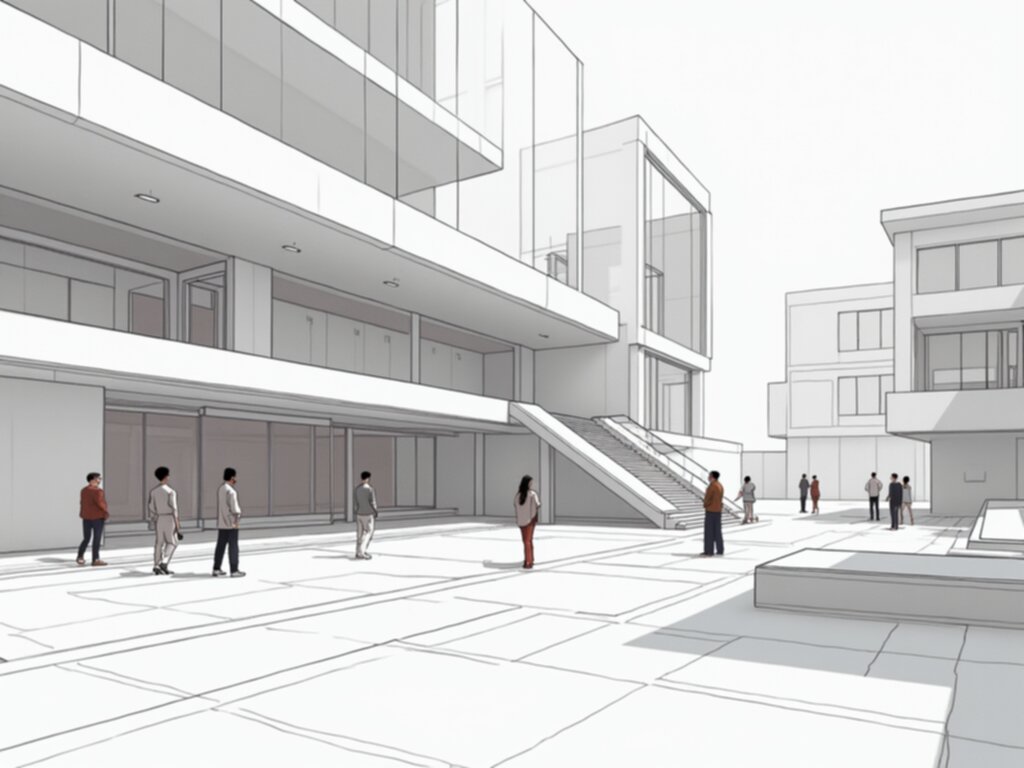
Modernist Principles Rooted in Florida Vernacular
You know, when you first look at some of these striking Florida modern homes, you might just see clean lines and glass, but honestly, the real genius lies in how they’re talking to the place they sit in. Think about those deep overhangs you see on old cracker houses; Strang's crew didn't just ditch them, they spun them into those extended flat eaves, which is really just smart math to block the harsh summer sun while letting that weaker winter light sneak in—pure passive cooling. And that central breezeway in the old "dogtrot" style? That concept morphed into those huge sliding glass doors they use, setting up the whole building so the air just rushes right through, which is something you absolutely need when it’s that sticky down here. It’s not just about shade and breeze, either; check out the foundations. Those houses are often lifted up on stilts, just like the old vernacular places, not just because of flood maps, but because getting the main floor up lets the cool air circulate underneath, stopping that ground moisture from creeping into your living space. Plus, when they use local stuff, like that coquina rock you see everywhere, it’s not just for looks; that heavy stone works like a natural battery, soaking up heat during the day and letting the house breathe slowly at night, something the original builders figured out ages ago. They even managed to hide rainwater collection systems, kind of like those old settler cisterns, right into the modern roof lines, proving sustainability isn't a new idea, just a better-engineered one now. It’s this quiet engineering, marrying that old-world knowledge with new materials, that makes these designs feel so right, like they’ve always belonged there.
The Dynamic Interplay of Horizontal and Vertical Forms
Look, we talk a lot about how these modern designs feel right, but let's get into the real nuts and bolts of *why* they work so well, especially when you look at how Strang plays with horizontal versus vertical surfaces. You see, it isn't just about making a pretty shape; it's about engineering the climate right into the building's bones, where a concrete roof plane meets that tall glass wall, for instance, and that meeting point sets your solar heat gain—that's where the magic happens. I was looking at some notes, and apparently, the ratio of how much flat surface area you have compared to vertical walls seriously controls how much the inside temperature swings between day and night, which is something you definitely notice when it’s hot and humid out there. They frequently push those roof overhangs way past what's standard down here, sometimes hitting ratios like 1.8 to 1 projection versus height, all to hit specific yearly sun targets—it's just smart, calculated shading. And then there's the vertical stuff; they use specific aggregate mixes in their stucco, almost like fine-tuning the texture so it scatters high-angle light by about 40% just to cut down on that blinding glare you get off a flat white wall. Honestly, sometimes the shadow lines where these elements cross are mathematically figured out so they line up perfectly with the sun during the equinoxes, which is just wild attention to detail. Think about it this way: where those vertical walls are set back from the edge of the roof, that distance is often based on the golden ratio when it's right next to where people walk in and out. Maybe it's just me, but comparing the materials helps—the vertical walls are usually lighter stuff, but the roofs are thick concrete slabs to act as a thermal battery, managing that cool-down cycle overnight. And get this: right where those forms kiss, they design the little gap between them to actually funnel the breeze, boosting the air speed right where you need it most on a sticky afternoon. It’s this constant conversation between the flat and the tall that makes these buildings breathe.
Integrating Design with Miami Beach's Protected Waterways
You know, when you think about building something truly special in Miami Beach, your mind probably jumps straight to those incredible ocean views, right? But honestly, the real design puzzle, and where I think firms like Strang really shine, isn’t just about the vast ocean; it’s about those incredibly delicate, protected waterways, the canals, and bayfronts that are just teeming with life and are so vital to the whole ecosystem here. I mean, their whole 'Environmental Modernism' concept isn't just a catchy phrase; it's this deeply thoughtful way they approach a site, recognizing you can't just plop a building down without considering its aquatic neighbors. We're talking about super sensitive areas, where even a little bit of poorly managed runoff or the wrong landscape choice can seriously mess with the marine life, the water quality, everything that makes Miami Beach, well, Miami Beach. So, how do you create these striking homes, these architectural statements, while also being a genuinely good steward of those fragile water systems? It really comes down